Contact UsBook an Appointment
brain_blue

Concussion Care in Atlanta, GA

At Neuroscience Specialty Centers in Atlanta, GA, our neurologists provide complete evaluation, diagnostic testing, and therapy for concussion and post concussion symptoms so you can recover safely and return to daily life with confidence.
  • Neurologist-led concussion care for teens and adults
  • Advanced concussion diagnostic testing and rehabilitation in one location
location-purple
Our Address
2200 Century Pkwy NE
Suite 260, Atlanta, GA 30345
contact-purple
Contact & Support
Email Us: care@nscenters.com
Call Us: 404.946.9327
hours-purple
Office Hours
Monday - Friday: 8:00am - 5:00pm
Saturday & Sunday: Closed
Schedule an Appointment Directly  

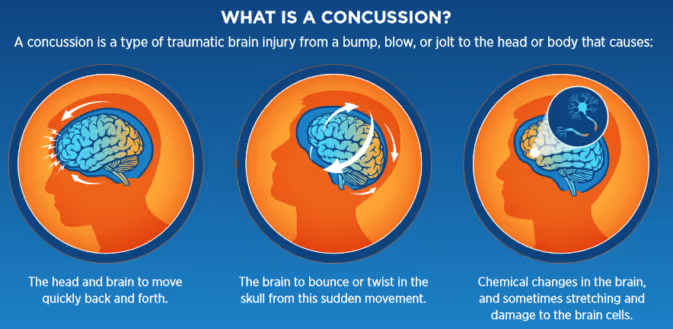
What is a Concussion?

A concussion is a type of traumatic brain injury caused by a hit to the head or body that makes the brain move quickly inside the skull. This sudden change in movement can affect how your brain uses energy and can lead to problems with thinking, balance, vision, mood, and headaches.

Our Atlanta Neurologists focus on both the immediate injury and ongoing post concussion issues to protect your long-term brain health.

Symptoms of a Concussion

A concussion can affect the brain in multiple ways, leading to a range of symptoms that may appear immediately or develop over time. These symptoms can impact cognitive function, balance, vision, and overall well-being. While some may seem mild at first, untreated concussions can have lasting effects. Understanding the signs of a concussion is crucial for early detection and proper recovery. Below are common symptoms to watch for:

Headache

Nausea or Vomiting

Blurred or Double Vision

Mood or Behavior Changes

Dizziness or Balance Issues

Confusion or Memory Problems

Fatigue or Drowsiness

Sensitivity to Light and Noise

Not every concussion causes loss of consciousness. If you have these symptoms after a hit to the head or body, you should see a concussion specialist. Early evaluation helps prevent long-term problems and guides a safe return to work, school, and sports.

Our Approach to Concussion Care

At Neuroscience Specialty Centers, we take a holistic and patient-centered approach to concussion center in Atlanta care. Our team of specialists tailors treatments to address each patient’s unique needs, ensuring a thorough and effective recovery process.
3
2
1

Comprehensive patient evaluation

Your visit begins with an in-depth conversation about your injury, medical history, and symptoms, followed by a neurologic exam focused on concussion and brain function.

Advanced concussion diagnostic testing

We use specialized tests to evaluate cognitive function, balance, eye movements, neck function, and mood. This goes beyond a standard MRI or CT to understand how your brain is functioning after the injury.

Personalized treatment and rehabilitation

Based on your results, our multidisciplinary team creates a customized plan that may include cognitive rehabilitation, vestibular therapy, vision therapy, physical therapy, and counseling.
1. Comprehensive Patient-Provider Conversation
Our care begins with an in-depth discussion of your symptoms and medical history to tailor a treatment plan suited to your unique needs.
2. Diagnostic Testing
Unlike structural injuries, concussions are functional injuries, meaning MRIs and CT scans alone are not sufficient for diagnosis. We utilize state-of-the-art diagnostic tools to assess cognitive, vestibular, ocular motor, and emotional function.
3. Personalized Treatment & Therapy
Every concussion is different. Our multidisciplinary approach ensures that patients receive specialized care from at least two of our experts to address their specific needs and maximize recovery.

Concussion Diagnostic Testing in Atlanta

Our concussion diagnostic testing in Atlanta provides a detailed picture of how your brain and nervous system are functioning so we can target treatment where you need it most.

Cognitive Function Testing

General cognitive function exams evaluate areas like working memory, attention issues, reaction time issues, processing issues, and more.

Cognitive driving exams to evaluate someone’s ability to manage the cognitive demands of driving and if the person is safe to drive.

Auditory processing/neurophysiologic exams allow for the understanding of minute details and functions of the brain that can be correlated with the larger behavioral issues people may be experiencing.

Vestibular and Balance Testing

Videonystagmography (VNG) allows for the tracking of the eyes throughout many different test conditions. Eye movement is an excellent resource for the evaluation of general brain function.

Electrophysiology exams can help to look at the function of the cranial nerves and associated structures through the brainstem to evaluate for any issues with how the nerves fire and send signals to the brain and spinal cord.

Rotational testing allows for the evaluation of someone’s ability to maintain stable vision while moving or turning.

Ocular Motor Assessment

Videonystagmography (VNG) allows for the tracking of the eyes throughout many different test conditions. Eye movement is an excellent resource for the evaluation of general brain function.

Screening exams can help to evaluate for issues like convergence insufficiency, which can affect someone’s ability to focus.

Post Traumatic Headache Evaluation

MRI and CT scan to rule out any kind of structural abnormality (tumor, stroke, bleed).

Electroencephalography (EEG) looks at brain waves to determine if there is any evidence of abnormal electrical discharges in the brain to suggest a seizure tendency, slow brain activity, or any specific areas of abnormal brain activity.

Physical exams allow providers to evaluate for possible issues like neck or muscle involvement that could lead to the headache.

Cervical Spine and Neck Assessment

Cervical range of motion to understand if there is a reduction in movement.

Joint position error helps to understand how the neck is affecting other areas like balance and spatial awareness.

Butterfly movement control evaluates the patient’s ability to integrate multiple systems with neck function.

Anxiety, Emotional and Behavioral Changes

Post Crash/Post Trauma screening tools to evaluate for anxiety, phobias, or other stressors associated with the injury.

Mood, nervousness, and anxiety scales to better understand a person’s current symptoms following the injury.

Buffalo Concussion Treadmill Test (BCTT)

(BCTT) at Neuroscience Specialty Centers in Atlanta

For many people with post concussion symptoms, exercise triggers worsening headaches, dizziness, or fatigue. The Buffalo Concussion Treadmill Test (BCTT) helps us find a safe heart rate and exercise level to guide your recovery.

As a post concussion syndrome resource in Atlanta, we use BCTT results to design graded exercise programs that support recovery instead of making symptoms worse.
Schedule your BCTT assessment today

Advanced Therapy for Concussion Recovery

A concussion can impact your cognitive function, balance, vision, and emotional well-being—but the right treatment can help you recover and regain control. At NS Centers, we use a multidisciplinary approach to address every aspect of your recovery, from mental clarity to physical stability.

Cognitive Rehabilitation

Cognitive Rehabilitation Therapy (CRT): This therapy focuses on improving specific cognitive skills that may be affected by a concussion, such as attention, memory, executive functions (planning, problem-solving), and processing speed. It may involve exercises, computer-based tasks, or real-life simulations to help retrain these skills.

Cognitive Behavioral Therapy (CBT): While not directly targeting cognitive skills, CBT can be helpful in managing emotional and psychological difficulties that often accompany a concussion, such as anxiety, depression, or difficulty coping. By addressing these emotional challenges, CBT can indirectly improve cognitive function by reducing stress and improving focus.

Speech-Language Therapy (SLP): If the concussion has affected communication skills, such as difficulty with speech, language comprehension, or reading, SLP can help with retraining these skills. It can also address cognitive skills related to language, such as word-finding or following instructions.

Vestibular and Balance Therapy

Vestibular Rehabilitation Therapy (VRT): This therapy focuses on balance and dizziness problems that can occur after a concussion. By improving balance and reducing dizziness, VRT can indirectly improve cognitive function by reducing these distracting symptoms and improving focus.

Balance retraining therapy.

Habituation and adaptation exercises.

Sensory re-integration.

Vision and Ocular Motor Therapy

Vestibular Rehabilitation Therapy (VRT): This therapy focuses on balance and dizziness problems that can occur after a concussion. By improving balance and reducing dizziness, VRT can indirectly improve cognitive function by reducing these distracting symptoms and improving focus.

Post Traumatic Headache Treatment

Medications.

Neuromodulation/biofeedback.

Lifestyle changes.

Autonomic nervous system management.

Cervical and Neck Rehabilitation

Physical Therapy.

Orthopedics.

Range of motion exercises.

Sensory re-integration.

Anxiety, Emotional and Behavioral Changes

Psychology/Neuropsychology.

Medications.

blue-ribbon
Experience and Expertise
blue-person
Patient Focused
vector brain
Start your recovery with our advanced therapy options!
Learn More Now
black-right-arrow
Why Choose NS Centers?
experience
Experience and Expertise
pie
Multidisciplinary Clinical Team
patients
Patients-Focused Practice
experience
Honesty and Integrity
money
Reasonable Treatment Prices
Company Profile
Download Profile.PDF
download
Download Profile.DOC
download
Are you having
health problems?
Contact us today!
location-icon2
Business Address
2200 Century Parkway
NE Suite 260
Atlanta, GA 30345
contact-bubble2
Contact With Us
Mail Us: care@nscenters.com
Call Us: +1 404.946.9327
Fax Us: 833.941.2436
clock-dark2
Working Time
Monday - Friday: 8:00am - 5:00pm
Saturday and Sunday: CLOSED